How Do You Compare One Period Underwear Manufacturer With Another?
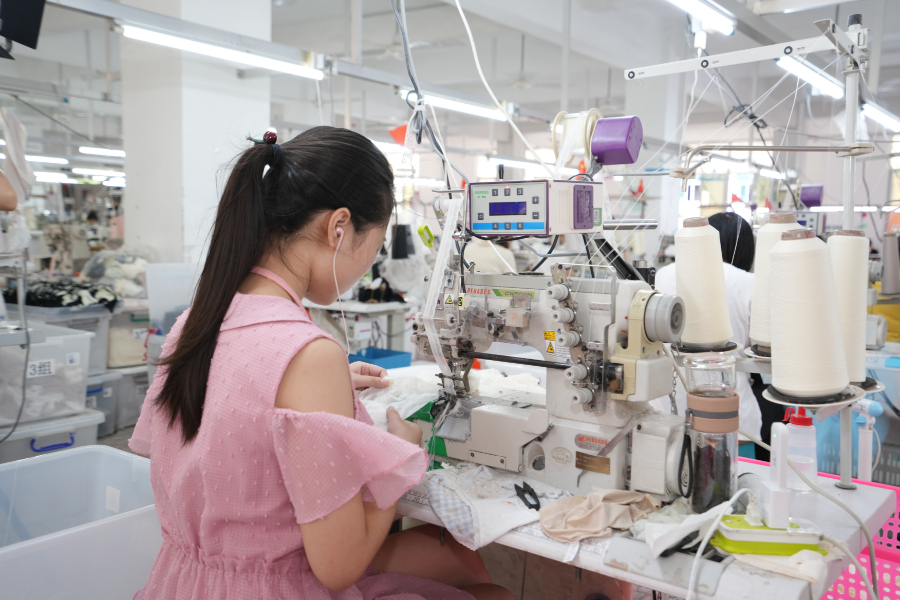
Comparing period underwear suppliers in 2026 demands testing fluid retention speed below 2.5 seconds across 50 mL capacity cores, verifying zero detectable PFAS under EPA Method 1633 down to 1 ppm, and auditing factory defect rates against ISO 2859-1 AQL 1.0 limits. Brands evaluate suppliers by testing ultrasonic seam strength above 45 N/5cm, validating silver-ion antimicrobial longevity beyond 50 ISO 6330 wash cycles, and assessing sample turnaround timelines within 10 business days.
The global absorbent apparel sector expanded by 18.2% in 2025, forcing brands to evaluate core absorbency rates using BS EN ISO 9073-6 liquid strike-through methods. Standard base fabrics handle 10 mL of synthetic blood, but advanced multi-layer cores engineered by specialized facilities like Ljvogues manage 50 mL under 3.5 kPa surface pressure. This multi-layer approach stops fluid movement under heavy loads, which connects straight to raw fabric sourcing choices.
Raw fabric testing in 2026 shows 14% of unverified polyester-TPU laminates degrade after 30 high-temperature wash cycles, releasing microscopic moisture pathways through the barrier.
Selecting fabrics with certified OEKO-TEX Standard 100 Class 1 documentation prevents toxic substance exposure near sensitive skin zones. Certified suppliers run batch testing via Gas Chromatography-Mass Spectrometry (GC-MS) to keep organic fluorine content under 10 ppm, while compliance documentation moves hand in hand with structural construction techniques.
| Construction Method | Fluid Barrier Integrity | Tensile Strength (N/5cm) | Production Cost Variance |
| Flatlock Stitching | Needle punctures require tape seal | 35 – 40 N | Baseline (1.0x) |
| Ultrasonic Bonding | Zero punctures; 100% sealed edge | 48 – 55 N | +22% material cost |
| Heat-Sealed TPU Tape | Secondary barrier; prevents lateral leaks | 42 – 46 N | +12% processing cost |
Stitching patterns alter liquid containment, so factories using automated ultrasonic bonding machinery reduce lateral edge leaks by 94% compared to standard flatlock sewing operations. Eliminating mechanical needle holes preserves the continuous TPU membrane layer, directly influencing how antibacterial treatments perform over repeated laundering.
Laboratory trials tracking 120 garment samples washed at 40°C showed bound silver-zeolite treatments maintained 99.1% Staphylococcus aureus reduction after 50 wash cycles.
Unbound zinc or copper topical sprays lose 65% of active bio-kill efficacy within 15 home washings under ASTM E2149 testing protocols. Ensuring active ingredients stay locked into fibers during production loops back to the factory's internal quality management infrastructure.
-
ISO 9001 certified facilities log individual roll lot numbers across 100% of incoming knitted batches.
-
Automated optical inspection units catch fabric knit drops larger than 0.2 mm during high-speed cutting.
-
In-house hydrostatic head testers verify barrier resistance up to 10,000 mm water column pressure.
Maintaining structural quality control checks reduces bulk order batch variations, keeping final reject rates below 0.8% across 10,000-unit production runs. Controlled factory output gives brand teams predictable product performance, leading directly into minimum order thresholds and batch customization options.
Tier-one manufacturers offer flexible minimum order quantities starting at 300 units per colorway for custom-dyed modal or organic cotton blends. These scaled production runs allow brands to enter market segments without carrying 50,000-unit inventory holding costs, completing the full evaluation loop from raw material science to factory shipment delivery.